
 JayOlson
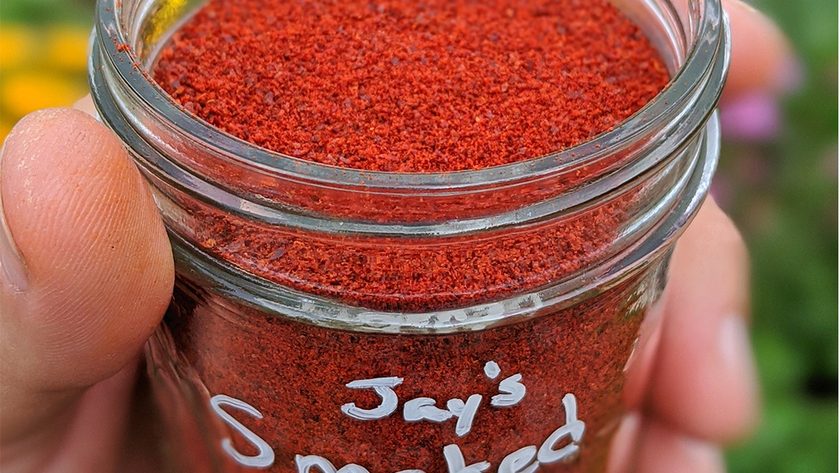
There’s a moment when I open a jar of our own smoked paprika and the whole kitchen smells like the garden and the smoker at once. It’s one of the quiet rewards of this place, and it all starts with a single row of peppers.
This post is part of Project Spice Rack, my ten-year experiment in growing, drying and grinding our own spices, because homegrown simply tastes better than anything off a store shelf. Paprika was one of the first jars on the rack, and it’s still a favorite.
Picking your peppers
Here’s something that surprised me: there’s no single “paprika pepper.” Paprika is simply dried, ground red pepper, and the classic Hungarian and Spanish versions are made from several different mild varieties. I once bought “paprika pepper” seeds from a seed store, and what grew looked and tasted just like an Anaheim. What does matter for regular paprika is a pepper that’s sweet and thin-walled. Thin walls dry evenly and grind down fine, and sweet keeps the flavor mellow. So I use what grows well here, and I make two versions:
- Smoked paprika: mostly smoked Anaheims, with a bit of ancho and bell pepper. I remove the seeds for this one.
- Hot smoked paprika: smoked guajillo, jalapeño and serrano. My guajillos look a lot like Anaheims but have good heat. I leave the seeds in for this one.
Grow or buy? All of these are easy to find as seeds or starts, and most take about 70 to 90 days from transplant to harvest, plus a few more weeks to ripen fully red. If you’re not growing your own, look for them at a farmers market in late summer and fall, when they’re at their best.
Harvest
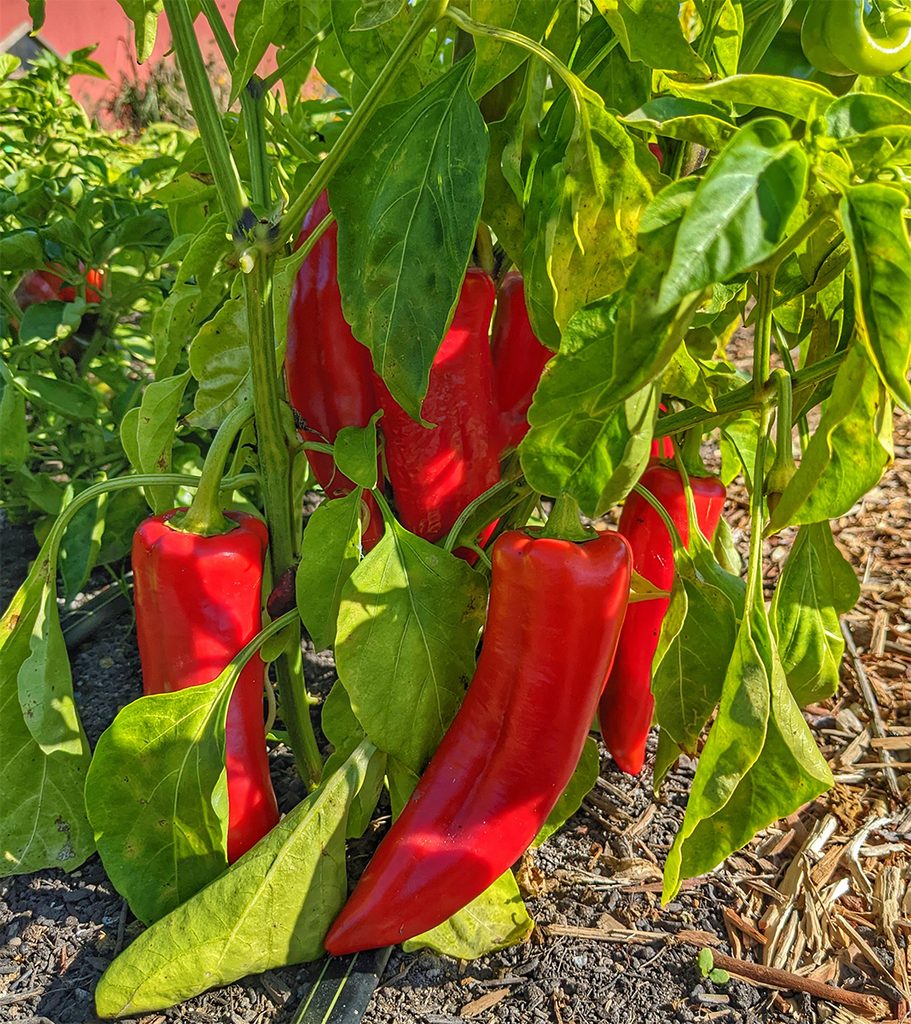
Wait until the peppers are fully red on the plant. The color in the jar is only as deep as the color in the field.
Smoking
My first rule of smoking peppers: let them fully ripen on the plant to a nice, rich red. Red peppers survive the smoking process so much better than green. The exception is anchos, which smoke amazing while they’re still green.
There are really two types of peppers when it comes to drying. Thin-walled peppers like Anaheims and cayennes dry easily and take on smoke well. You can leave them whole and they’ll dry perfectly. The ones I don’t smoke, I string up and hang in the kitchen or in the shade. Thick-walled peppers like bells and jalapeños are different. Hang them whole and they rot from the inside before they dry, so I always cut those before smoking or drying.
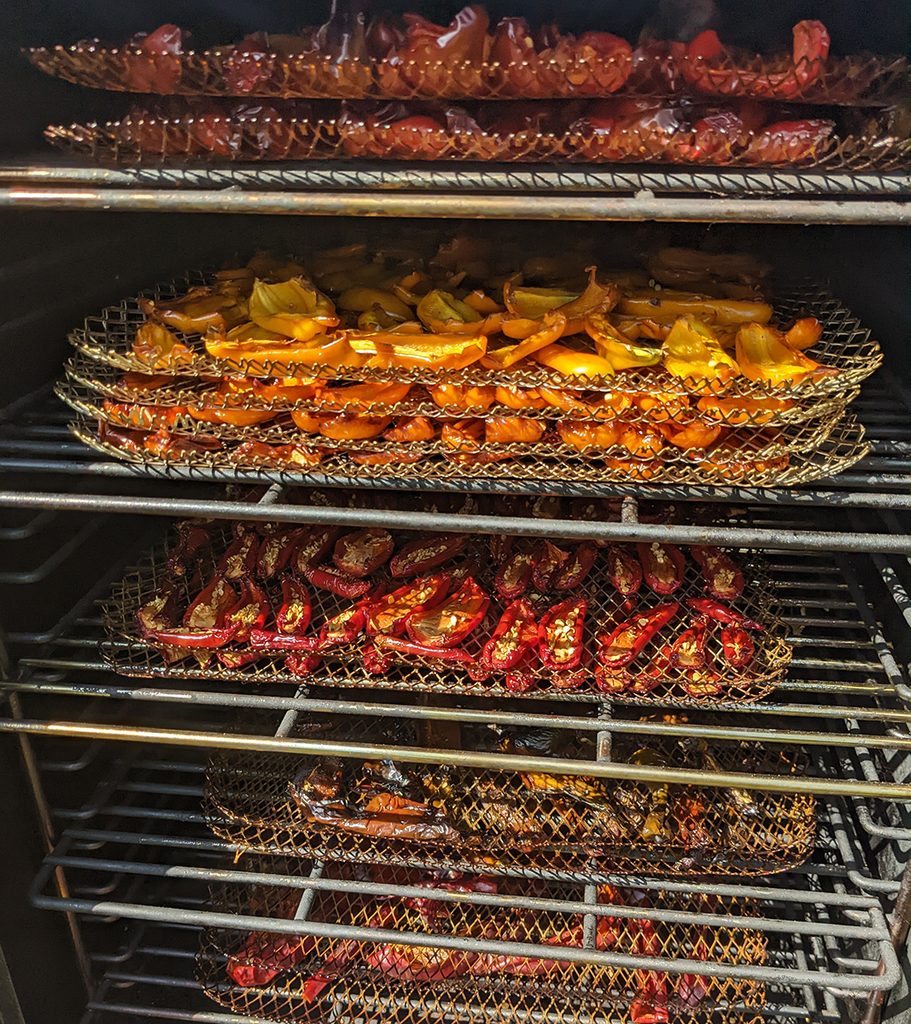
I smoke the peppers on my pellet smoker. I cut them in half, even the thin-walled ones, because they dry a little faster and take on smoke better. Then I lay them face up on wire trays and put them in the cold-smoke section, which runs around 100°F. They stay there about 6 hours, then finish drying in the dehydrator. If you don’t have a cold smoker, you can use the main chamber at its lowest setting (around 175°F), but cut the time to 1 to 3 hours. For spices I just use generic pellets. Premium wood pellets don’t add any extra flavor here, so save those for meats like pastrami and bacon.
Low and slow is the goal. You want smoke flavor, not cooked peppers. And don’t overdo it: too much smoke turns them bitter, with a taste and smell that’s almost like tobacco. That’s why I sometimes move them from the smoker to the dehydrator to finish drying.
Drying and grinding
After smoking, the peppers go into the dehydrator at 105 to 125°F, with 125°F the sweet spot for peppers, until they’re almost brittle. To check, pull one piece, let it cool for 15 minutes, and try to snap it. Any bend at all means moisture, and moisture means mold in the jar, so back in it goes. There’s no set time: it depends on how long they spent in the smoker, so I just test a piece every once in a while.
Here’s the trick I’ve learned over the years: don’t grind the whole harvest. Whole dried peppers hold most of their flavor for years, but once they’re ground, the flavor starts to fade quickly. So I only grind what I’ll use in the next few months and keep the rest whole.
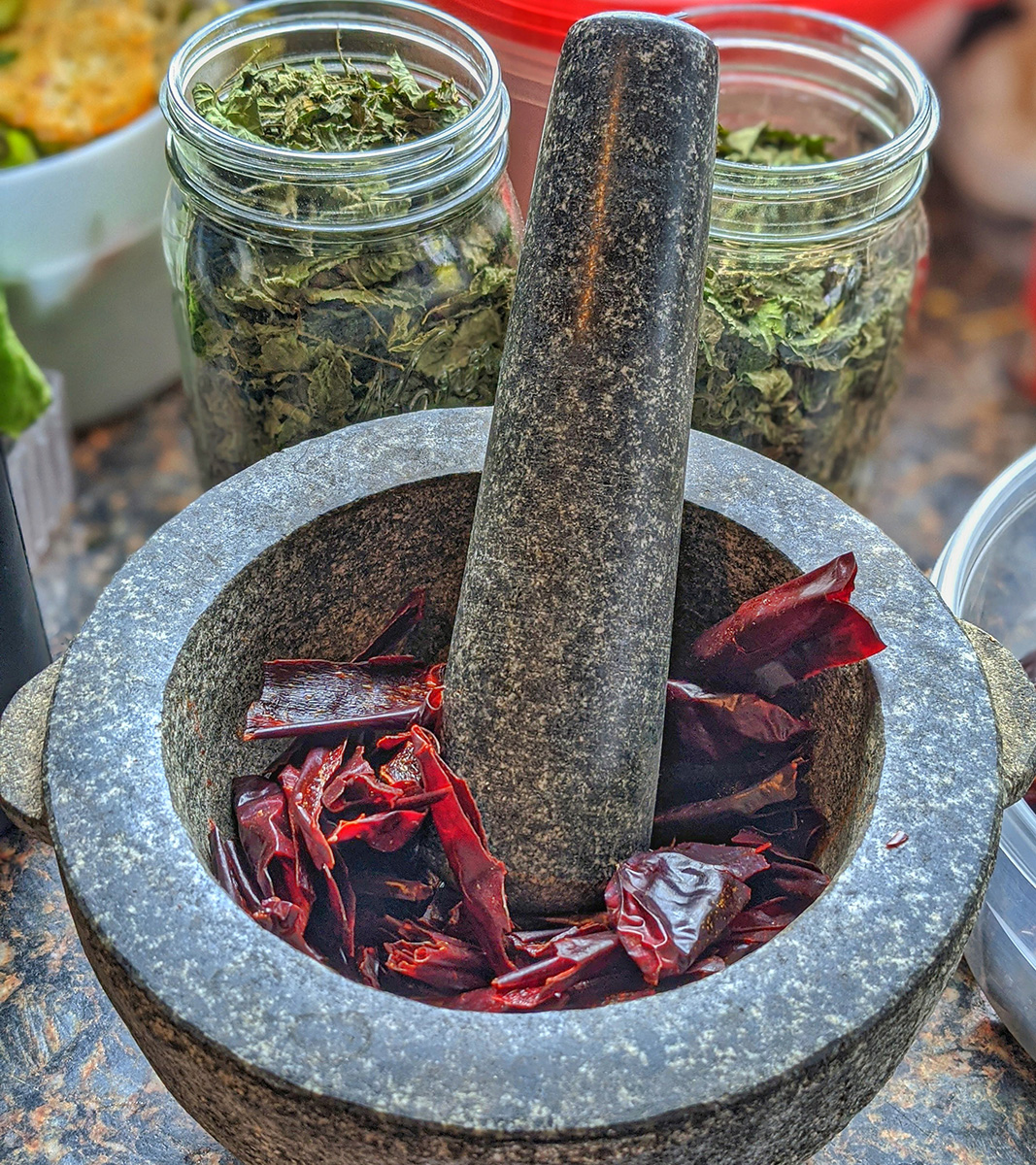
The best tool for the job is a simple coffee grinder used only for spices. It works great, and it’s cheap enough that if it wears out you just buy another. For big batches, like when I’m making jars to give as gifts, I use the Vitamix.
No matter how dry the peppers are, some pieces just won’t grind down fine. That’s fine, and it’s how I get two jars from one batch. I run everything through a small sieve: the fine powder becomes the paprika, and the bigger flakes that stay behind become my pepper flakes.
Storing and using it
Store the whole dried peppers in an airtight container in a cool, dark place. Even better, vacuum pack them, or at least drop an oxygen absorber in the jar. The ground paprika goes in a small airtight jar too, and I refill it from the whole peppers every few months. I use smoked paprika in almost every spice blend I make, and I sprinkle it on just about everything. It’s a huge bump in flavor with no added salt.